Image Resizer guide
How Image Dimensions, DPI, and File Size Work Together
When a website requires both image dimensions and a KB limit, set the required width and height first and then apply the file-size limit. If the resulting image is still too large, additional compression may be necessary.
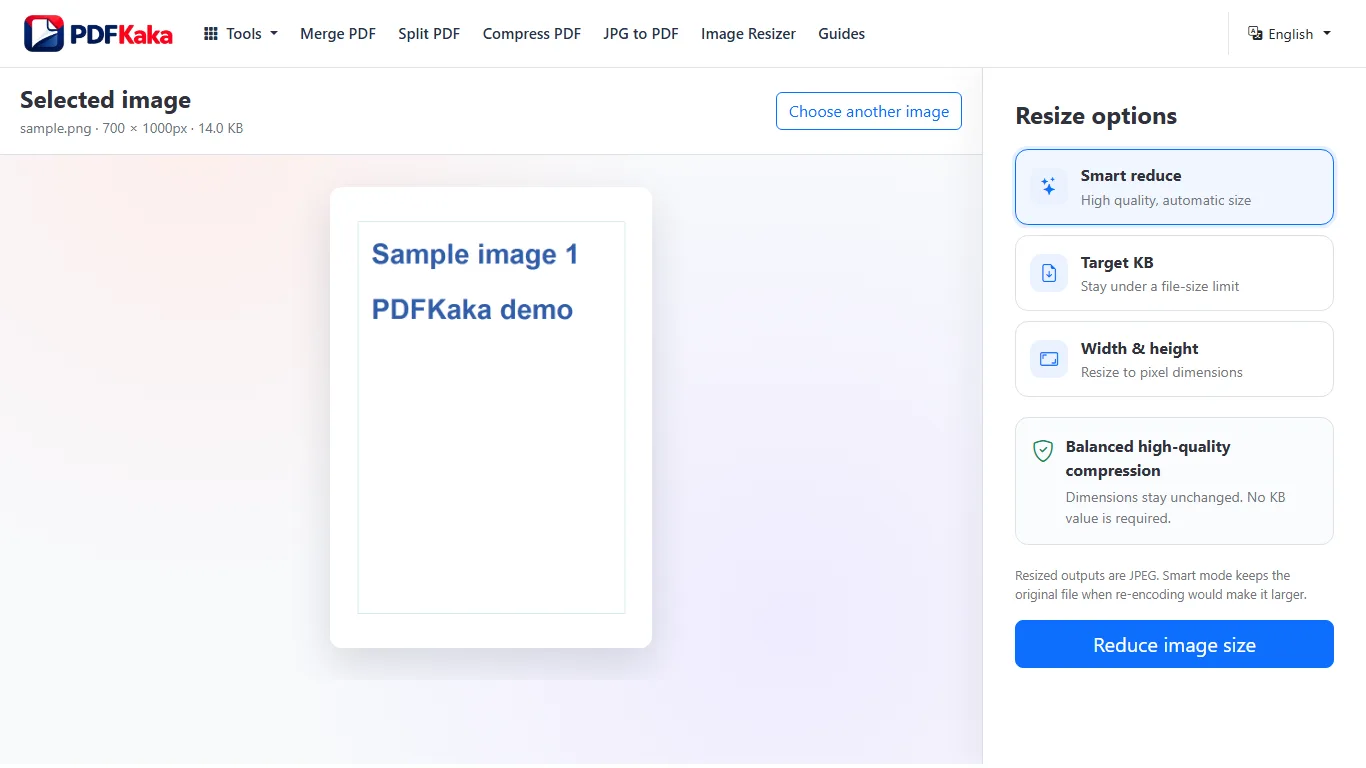
Resize the image
- When a website requires both image dimensions and a KB limit, set the required width and height first and then apply the file-size limit. If the resulting image is still too large, additional compression may be necessary.
- Enter the required width and height.
- Check dimensions, file size, sharpness, and aspect ratio.
- Apply the maximum KB value and generate a preview.
Apply dimension and file-size constraints in the right order
Set width and height first because they define the actual pixel canvas. Then apply the maximum KB target by adjusting encoding quality.
Keep the aspect ratio locked unless the destination explicitly requires both exact dimensions; otherwise faces, logos, and text can look stretched.
- Enter the required width and height.
- Check dimensions, file size, sharpness, and aspect ratio.
- Apply the maximum KB value and generate a preview.
Check the resized image
Check the final width, height, aspect ratio, format, and byte size against every portal requirement.
FAQ
Can every image be reduced to an exact KB value without changing appearance?
No. File size depends on pixel dimensions, format, and encoding. Reaching a strict size target can require reducing dimensions or quality.
What is the current input limit for Image Resizer?
JPG, JPEG, PNG; One JPG/JPEG/PNG ≤25 MiB, ≤16,384 px/side, ≤40 MP.
What does Image Resizer create?
target is an upper bound, exact byte equality not guaranteed; transparent pixels may need a background for JPEG; Encoded image.