
Image Resizer guides

How to reduce image size without making it blurry

Remove unnecessary pixels first and use the highest JPEG quality that still meets the required maximum size.
Open Image Resizer

Reviewed by PDFKaka ·

How to reduce image size without making it blurry

What this workflow helps you do

Quality depends on whether the task copies existing PDF objects or renders and rebuilds page images. The Guide identifies what Image Resizer changes so the result can be checked instead of relying on a vague quality promise.

Remove unnecessary pixels first and use the highest JPEG quality that still meets the required maximum size.

Plan the task in Image Resizer

Reduce an image to a required file-size limit, set exact pixel dimensions, or balance both requirements before downloading a JPEG result.

An image resizer in KB solves a different problem from changing width and height. PDFKaka supports both: choose a maximum file size for an upload portal, or set pixel dimensions for a form, website, profile, or document. The output is generated locally as a JPEG.

  1. Resize an image to 20KB, 50KB, 100KB, 200KB, or 500KB. Choose a common preset or enter another maximum. The tool searches for the best practical JPEG quality and reduces dimensions only when the original image cannot meet the target through quality adjustment alone.
  2. Set image width and height in pixels. Use dimension mode when a portal specifies width, height, or aspect ratio. Keeping the aspect ratio prevents accidental stretching, while the no-enlarge option protects smaller originals.
  3. Check photo quality after KB reduction. Very small targets can blur faces, document text, signatures, and fine edges. Review the downloaded image at full size and use a larger limit when essential detail becomes unclear.

Protect useful quality instead of trusting a label

Quality has to be checked in the actual Image Resizer output. Text, line art, photographs, signatures, stamps, and small numbers reveal different problems, so one preview or file-size value is not enough.

Keep the source unchanged and compare representative pages at a realistic viewing or printing size. If a setting produces an unacceptable result, return to the source instead of processing the degraded copy again.

  1. Inspect the smallest important text and details.
  2. Compare a representative output with the source.
  3. Keep the clearest version that satisfies the real requirement.

Settings and limitations to check

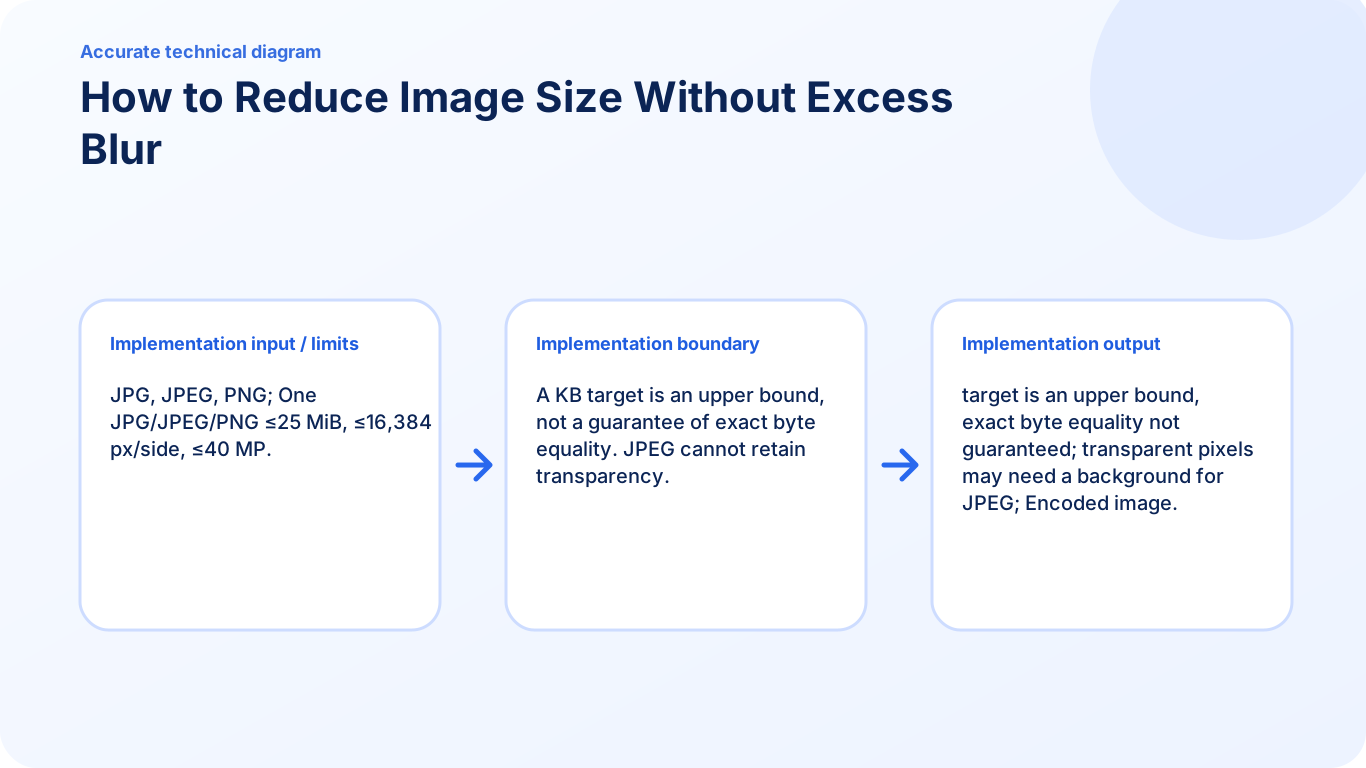
Will the resized image be exactly the requested KB size? The result is kept at or below the maximum, not padded to an exact byte count. Browser JPEG encoders can produce slightly different sizes.

Can I resize a PNG image in KB? Yes, but the output is JPEG. JPEG does not support transparency, so transparent PNG areas are flattened.

Can I increase image size in KB? The current tool is designed to reduce file size or change dimensions. Artificially increasing bytes does not improve image detail and is not offered as a target workflow.

  1. Use only the settings needed for the required result.
  2. Keep the source file available for comparison.
  3. Do not rely on an unsupported exact-size, fidelity, or security promise.

Review the completed file

Open the result at full size and inspect sharp edges, small writing, faces, and compression blocks.

Open the downloaded result in a separate viewer, inspect important pages or details, and repeat the workflow with adjusted settings if the output is not suitable.

  1. Confirm the expected file type and page count.
  2. Check important text, images, order, and orientation.
  3. Share or submit only the reviewed copy.

Tools used in this workflow

Frequently asked questions

What should I prepare before following this workflow?

Remove unnecessary pixels first and use the highest JPEG quality that still meets the required maximum size.

How should I verify the result?

Open the result at full size and inspect sharp edges, small writing, faces, and compression blocks.

Will the resized image be exactly the requested KB size?

The result is kept at or below the maximum, not padded to an exact byte count. Browser JPEG encoders can produce slightly different sizes.

Can I resize a PNG image in KB?

Yes, but the output is JPEG. JPEG does not support transparency, so transparent PNG areas are flattened.

Can I increase image size in KB?

The current tool is designed to reduce file size or change dimensions. Artificially increasing bytes does not improve image detail and is not offered as a target workflow.

Do I need an account to use Image Resizer?

No. Current PDFKaka tools work without registration or sign-in.

Are my files uploaded while I use Image Resizer?

No. This working tool processes the selected files locally in the current browser session.