PDF to JPG guide
How to Prepare PDF Page Images for a File-Size Limit
PDF page rendering and exact file-size preparation are separate jobs: the first creates an image, while the second adjusts that image for a portal limit.
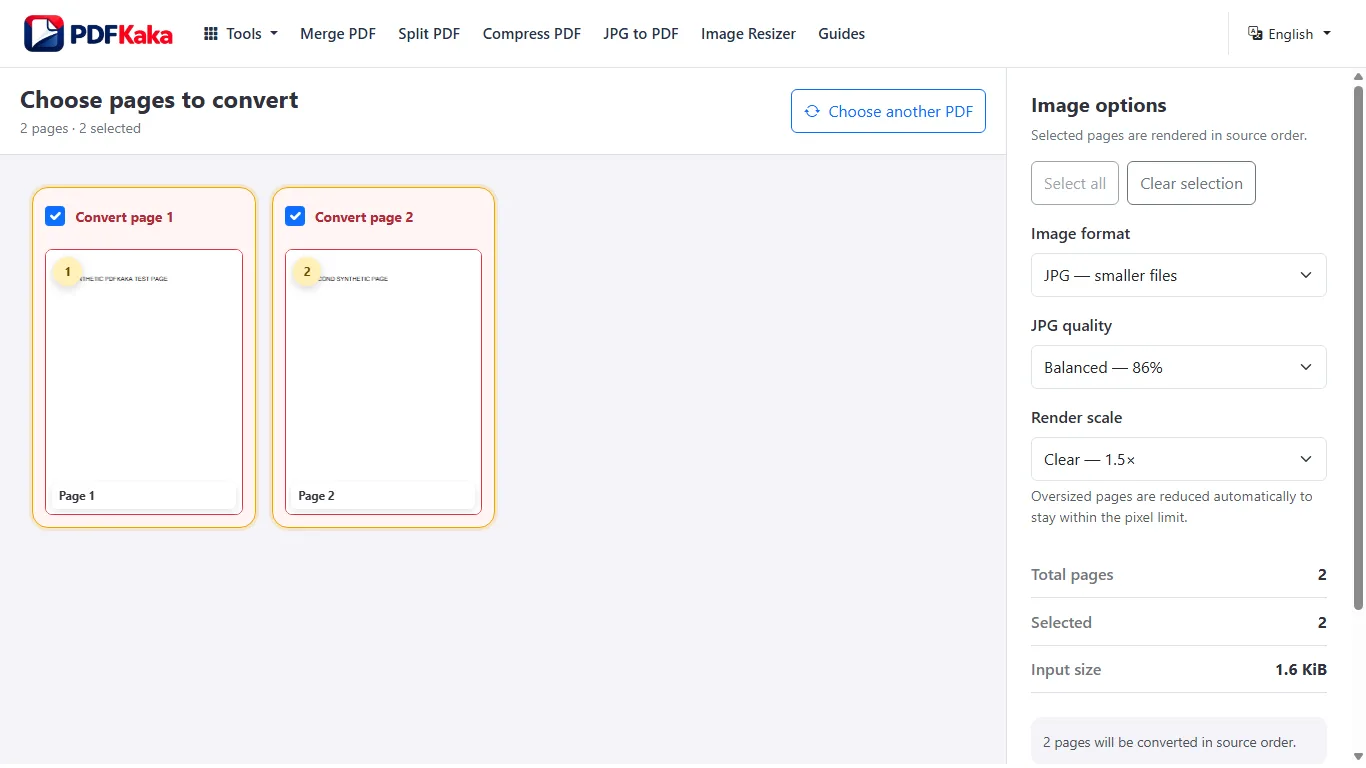
Render the PDF page as an image
Open PDF to JPG, select the page, choose JPG, and use a suitable rendering scale and quality. Download the single image directly or the ZIP when several pages are converted.
Adjust the image for the size limit
Open the JPG in Image Resizer. Record every destination rule, including maximum bytes, pixel dimensions, aspect ratio, and format. Reduce dimensions or JPG quality in measured steps, then check the exported file size.
A target such as 50KB or 100KB is normally a maximum, not a promise of exact byte equality. Very detailed pages may become unreadable before they reach an unusually small limit.
Check readability as well as bytes
Zoom into the smallest text, stamps, and identification details. Leave a little room below the portal's maximum when it may count decimal KB differently from binary KiB.
FAQ
Can PDF to JPG guarantee a 50KB image?
No. It controls rendering scale and JPG quality, but the final size depends on page detail. Use Image Resizer for a measured second stage.
Should I lower JPG quality or dimensions first?
Preserve enough pixels for readable text, then lower quality gradually. The better order depends on the portal's dimension rules.
Why can two PDF pages produce very different JPG sizes?
Photographs, flat colours, text density, noise, and page dimensions compress differently even at the same settings.