
Flatten PDF guides

How to flatten interactive PDF form fields

Complete and review supported form fields first, then turn their current values into fixed page content.
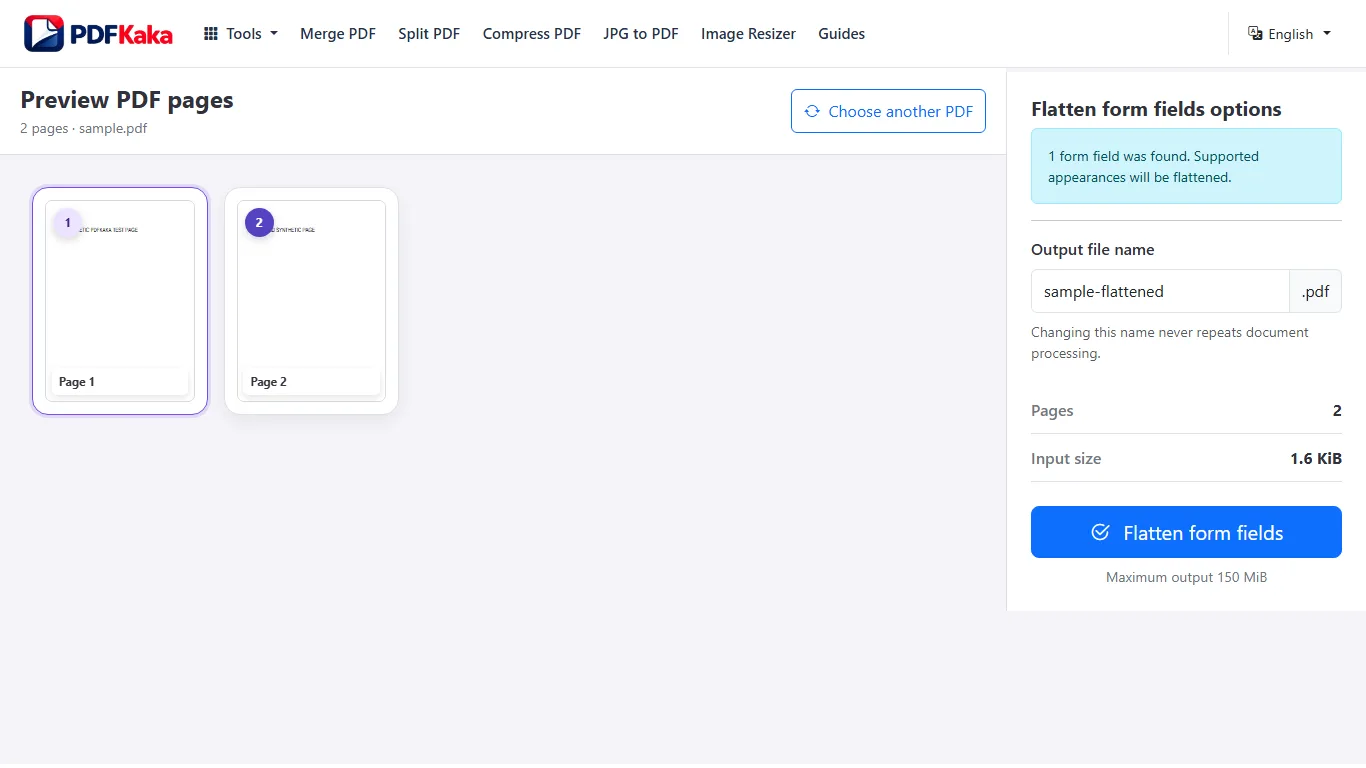
Open Flatten PDF

Reviewed by PDFKaka ·

How to flatten interactive PDF form fields

What this workflow helps you do

This Guide answers a focused Flatten PDF task and connects the explanation directly to the working browser tool.

Complete and review supported form fields first, then turn their current values into fixed page content.

Plan the task in Flatten PDF

Fix supported interactive form values into the PDF page content. Keep the original document if those fields may need to be edited again.

Flatten PDF converts compatible interactive form values into their visible page appearance. The resulting sharing copy is no longer casually editable through those fields, which can improve consistency for printing, submission, or review.

  1. Make completed form values non-interactive. Supported AcroForm values become fixed page content rather than editable controls in the flattened copy.
  2. Reduce form-display differences between viewers. Fixing field appearances can help recipients see the reviewed values even when PDF viewers handle interactive controls differently.
  3. Keep the editable source form. Flattening is difficult to reverse and is not encryption. Save the original separately if values may need to be corrected later.

Follow the focused browser workflow

Complete and review supported form fields first, then turn their current values into fixed page content.

Use Flatten PDF for the supported operation, keep the source unchanged, and make one reviewed output rather than repeatedly processing an already changed copy.

  1. Prepare a supported source file.
  2. Choose only the settings needed for the task.
  3. Download and review the completed result.

Settings and limitations to check

What does flatten PDF mean? It means converting supported interactive field values into fixed page content so those controls are no longer editable in the normal way.

Can I flatten a PDF online for free? Yes. Flatten supported form fields locally without creating an account.

Does flattening secure or encrypt a PDF? No. Flattening fixes supported field appearances; it does not add a password, encryption, permissions, or identity proof.

  1. Use only the settings needed for the required result.
  2. Keep the source file available for comparison.
  3. Do not rely on an unsupported exact-size, fidelity, or security promise.

Review the completed file

Open the flattened copy and confirm values are visible and no longer interactive.

Open the downloaded result in a separate viewer, inspect important pages or details, and repeat the workflow with adjusted settings if the output is not suitable.

  1. Confirm the expected file type and page count.
  2. Check important text, images, order, and orientation.
  3. Share or submit only the reviewed copy.

Tools used in this workflow

Frequently asked questions

What should I prepare before following this workflow?

Complete and review supported form fields first, then turn their current values into fixed page content.

How should I verify the result?

Open the flattened copy and confirm values are visible and no longer interactive.

What does flatten PDF mean?

It means converting supported interactive field values into fixed page content so those controls are no longer editable in the normal way.

Can I flatten a PDF online for free?

Yes. Flatten supported form fields locally without creating an account.

Does flattening secure or encrypt a PDF?

No. Flattening fixes supported field appearances; it does not add a password, encryption, permissions, or identity proof.

Do I need an account to use Flatten PDF?

No. Current PDFKaka tools work without registration or sign-in.

Are my files uploaded while I use Flatten PDF?

No. This working tool processes the selected files locally in the current browser session.