TXT to PDF guides
How to turn a long text file into a multipage PDF
Paginate long plain text using readable font and page settings rather than shrinking everything onto too few pages.
Open TXT to PDFReviewed by PDFKaka ·
What this workflow helps you do
This workflow is for a task involving several files or pages. Plan the order and intended outputs before opening TXT to PDF, because a quick thumbnail review prevents missing, duplicated, or misplaced content.
Paginate long plain text using readable font and page settings rather than shrinking everything onto too few pages.
Plan the task in TXT to PDF
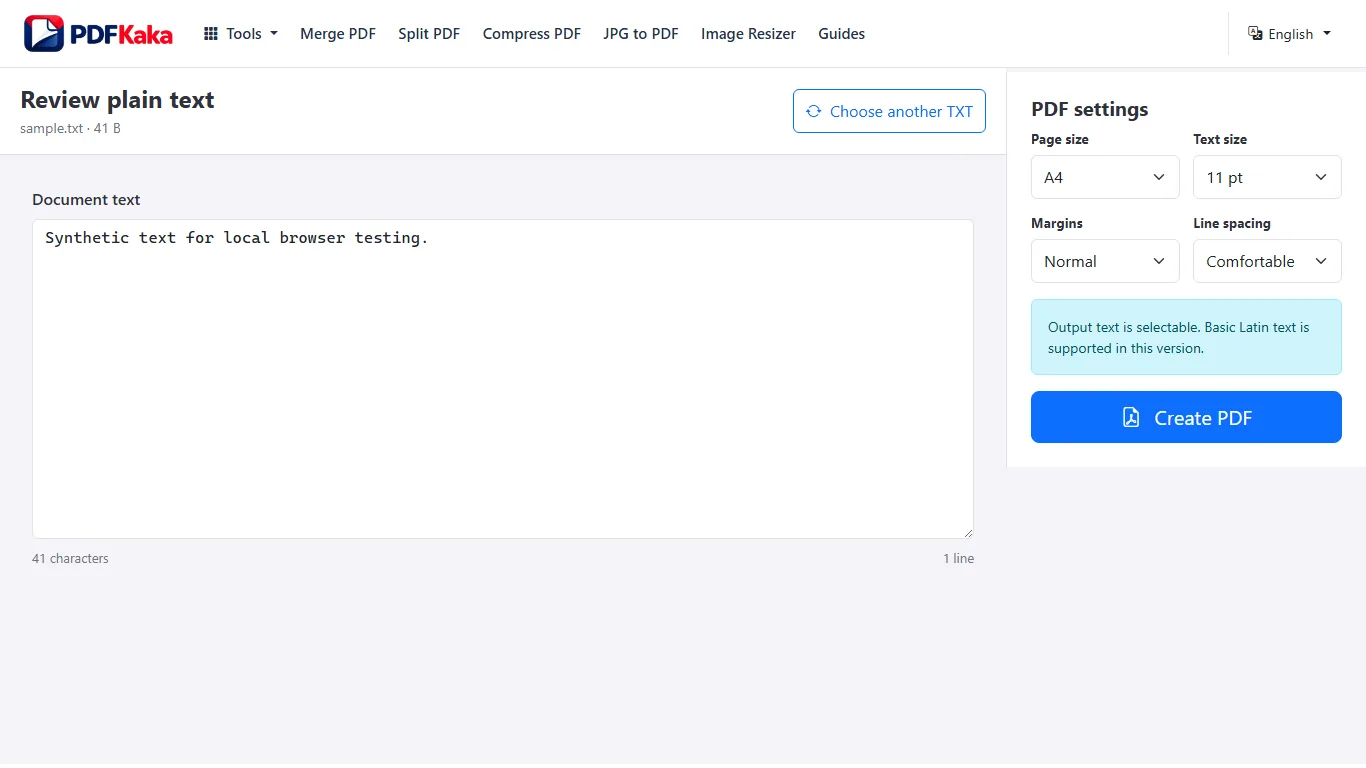
Convert plain text into a paginated PDF, choose the available page and text settings, and keep the generated document inside the current browser session.
TXT to PDF paginates plain text using the paper size, margins, font size, and line spacing you choose. The result keeps text selectable and creates a stable document for printing, reviewing, or sharing without turning the text into screenshots.
- Create PDF pages from a TXT file. Choose a UTF-8 text file, review its content, adjust the page settings, and create a consistently paginated PDF.
- Keep plain text selectable. The generated PDF stores real text rather than page images, making simple notes, logs, and drafts easier to search and copy.
- Choose readable text spacing. Paper size, margins, font size, and line spacing determine how much content appears on each page. Very long lines wrap within the selected margins.
Plan the files, pages, and output order
For this TXT to PDF task, decide what belongs in the result before processing. File names are useful clues, but page thumbnails and the intended reading sequence are the final check.
Paginate long plain text using readable font and page settings rather than shrinking everything onto too few pages.
- Count the required source files or pages.
- Put them into the intended sequence and remove duplicates.
- Compare the expected count with the completed output.
Settings and limitations to check
Can I convert TXT to PDF online for free? Yes. Choose a supported plain-text file and create the PDF without registration.
Does TXT to PDF understand Markdown formatting? No. The input is treated as plain text; Markdown and rich-text styling are not interpreted.
Will every writing system display correctly? The current standard PDF font is intended for basic Latin characters. Review non-Latin or specialist characters before relying on the result.
- Use only the settings needed for the required result.
- Keep the source file available for comparison.
- Do not rely on an unsupported exact-size, fidelity, or security promise.
Review the completed file
Check early, middle, and final pages for clipped lines, missing text, and awkward page breaks.
Open the downloaded result in a separate viewer, inspect important pages or details, and repeat the workflow with adjusted settings if the output is not suitable.
- Confirm the expected file type and page count.
- Check important text, images, order, and orientation.
- Share or submit only the reviewed copy.
Tools used in this workflow
Frequently asked questions
What should I prepare before following this workflow?
Paginate long plain text using readable font and page settings rather than shrinking everything onto too few pages.
How should I verify the result?
Check early, middle, and final pages for clipped lines, missing text, and awkward page breaks.
Can I convert TXT to PDF online for free?
Yes. Choose a supported plain-text file and create the PDF without registration.
Does TXT to PDF understand Markdown formatting?
No. The input is treated as plain text; Markdown and rich-text styling are not interpreted.
Will every writing system display correctly?
The current standard PDF font is intended for basic Latin characters. Review non-Latin or specialist characters before relying on the result.
Do I need an account to use TXT to PDF?
No. Current PDFKaka tools work without registration or sign-in.
Are my files uploaded while I use TXT to PDF?
No. This working tool processes the selected files locally in the current browser session.